In Los Angeles you need a permit for anything structural, anything that moves plumbing, gas or electrical, roofing, decks over 30 inches, most sheds over 120 square feet, water heaters, HVAC changes and any new or enlarged opening. You generally do not need one for paint, flooring, cabinets in place, countertops, minor drywall repair or like-for-like window retrofits in the same opening.
- Rule of thumb
- Structure or systemsIf it touches either, permit
- Usually exempt
- SurfacesPaint, floors, cabinets in place
- Shed threshold
- 120 sq ftUnder that, generally exempt
- Deck threshold
- 30 inchesAbove grade, needs a permit
What it costs
| What | Typical Los Angeles range | Notes |
|---|---|---|
| Interior and exterior paint | No permit | Any scale |
| Flooring, carpet, tile in place | No permit | Not changing structure |
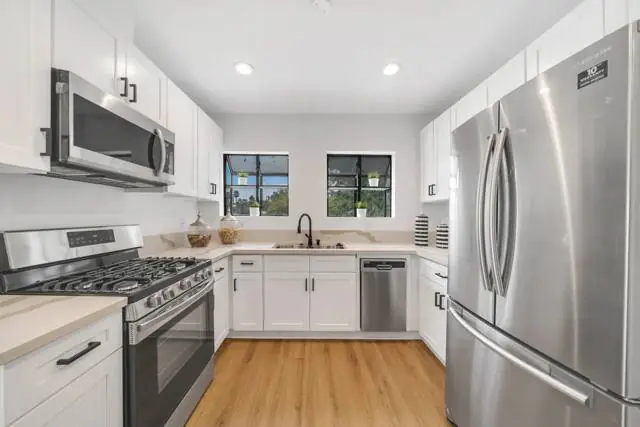
| Cabinets and countertops in the same spots | No permit | If no plumbing or electrical moves |
| Like-for-like window retrofit, same opening | Usually none | Still must meet energy and egress rules |
| New or enlarged window or door opening | Permit | Header is structural |
| Roof replacement | Permit | Required in the City of Los Angeles |
| Water heater replacement | Permit | Express or counter permit |
| Electrical panel upgrade | Permit | Plus utility coordination |
| HVAC replacement or new mini split | Permit | Mechanical permit |
| Repipe or sewer line replacement | Permit | Plumbing permit |
| Shed under 120 sq ft | Usually none | Setbacks and height still apply |
| Shed over 120 sq ft | Permit | Treated as a structure |
| Deck 30 inches or less above grade | Usually none | Check the local rule |
| Deck over 30 inches above grade | Permit | Guardrails and structure |
| Fence up to 6 feet in a rear or side yard | Usually none | Front yard limits are lower |
| Retaining wall over 4 feet, or any surcharged wall | Permit | Engineered |
| Removing a wall | Permit | Even a non-bearing one, if it is in the plan set |
| Kitchen or bathroom with anything moved | Permit | Plumbing, gas or electrical |
| Converting a garage to living space | Permit | It is a dwelling unit |
| Pergola or patio cover over 120 sq ft | Permit | Attached ones almost always |
| Solar panels | Permit | Expedited in most California cities |
| EV charger on a dedicated circuit | Permit | Electrical permit |
| Pool or spa | Permit | Plus barrier requirements |
| Seismic retrofit or foundation work | Permit | Engineered drawings |
The rule behind the list
Two questions settle nearly every case. Does it change the structure, meaning anything holding the building up or keeping weather out? Does it move or add plumbing, gas, electrical or mechanical? If either answer is yes, you need a permit. If both are no, you probably do not.
Everything else is a threshold: 120 square feet for a shed, 30 inches for a deck, 4 feet for a retaining wall, 6 feet for a fence. The thresholds vary slightly between cities, so confirm against your own building department rather than a national article.
What happens if you skip it
Three things, in rising order of expense. At resale you have to disclose unpermitted work, which gives buyers a discount to argue for and can make lenders and appraisers nervous. If you have a claim, an insurer can use unpermitted work as a reason to deny it. And if the city finds out, usually through a neighbour complaint or a later permit application, you can be ordered to open the walls and permit the work after the fact.
Permitting after the fact costs far more than permitting at the time, because the work has to be exposed, sometimes partly demolished, and brought to current code rather than the code that applied when it was built.
Getting an unpermitted thing legalised
It is usually possible. The city has a process for permitting existing work: you submit drawings showing what is there, it gets inspected, and anything not to code gets corrected. Older unpermitted garage conversions are the most common case in Los Angeles, and state ADU law has made many of them much easier to legalise than they used to be.
We do this regularly. The first step is pulling the property's permit history from the city and comparing it to what is physically there.
Los Angeles County figures, reviewed 2026-10-29 by America General Contractors, California contractor licence CSLB 1083262. Planning ranges, not a quote, and not legal advice. We confirm the current rules for your parcel before anything is drawn.
Questions
Do I need a permit to paint my house?
No, inside or out. Paint is not a permitted activity. If you are stripping and re-stuccoing, that is different.
Do I need a permit to replace a water heater?
Yes. It is a quick counter or online permit, but it is required, and it matters because water heater installs involve gas, venting and seismic strapping.
How big a shed can I build without a permit?
Generally up to 120 square feet, one storey, detached, not used as living space. Setback and height rules still apply even when the permit does not.
Do I need a permit to replace windows?
A like-for-like retrofit into the existing opening usually does not need one, but the windows still have to meet current energy-code performance and bedroom escape requirements. Changing the opening size always needs a permit.
What about work inside a condo?
Interior work in a condominium usually needs the same city permits as a house, plus your HOA's approval, which is a separate and often slower process.
Related reading
- Do I need a permit for a kitchen remodel in Los Angeles?
- How do I get a building permit in Los Angeles?