A Los Angeles remodel costs what it does because labour is roughly 40 to 50 percent of the bill, because small rooms concentrate every trade in the house into a few square feet, and because older houses hide problems that only appear once walls are open. On a $50,000 bathroom, materials are usually under $20,000 and the rest is people, permits, insurance and the cost of doing the work in sequence.
- Labour share
- 40 to 50%Of a typical remodel
- Materials share
- 30 to 40%Less than people expect
- Overhead and profit
- 15 to 25%Insurance, supervision, warranty
- Hidden conditions
- 10 to 15%Hold it back on pre-1970 houses
Work out your own number. The whole-house renovation cost calculator gives you a line-item range for your project in under a minute.
The honest breakdown on a $50,000 bathroom
| Line | Typical share | Why |
|---|---|---|
| Labour | $20,000 to $25,000 | Eight trades, in sequence, in 45 square feet |
| Materials and fixtures | $12,000 to $18,000 | Tile, vanity, glass, valve, toilet, lighting |
| Permit and inspections | $1,000 to $2,500 | Plumbing, electrical, building |
| Overhead | $5,000 to $7,500 | Insurance, workers comp, supervision, warranty |
| Profit | $4,000 to $7,500 | What keeps the company solvent enough to warranty your work |
The number that surprises people is labour. A bathroom needs a demolition crew, a plumber twice, an electrician twice, a framer, a drywaller, a waterproofer, a tile setter, a glass installer, a painter and a finish carpenter. Most of them cannot work at the same time, because the next one needs the last one's work inspected and dry.
Why small rooms cost more per square foot
Cost per square foot falls as rooms get bigger and simpler. A bathroom is the most expensive room in a house per foot because it has the highest density of trades, systems and waterproofing anywhere in the building. A bedroom is the cheapest because it is four walls, a floor, a ceiling and a couple of outlets.
This is also why a 400 square foot addition costs more per foot than a 1,200 square foot one. The expensive parts, the kitchen, the bathroom, the connections to existing systems, do not scale down.
What the 15 to 25 percent for overhead and profit actually buys
- General liability insurance and workers compensation, which is what stands between you and a claim if someone is hurt on your property
- A licence, a bond, and the regulatory compliance that comes with both
- A supervisor who is on your job rather than on a phone, catching the thing that is going wrong before you see it
- Scheduling, so the tile setter does not arrive before the waterproofing is inspected
- A written warranty, which is only worth anything if the company is still trading in three years
A bid that is 30 percent below the others has usually removed some of this list. Ask which parts.
Why old Los Angeles houses cost more
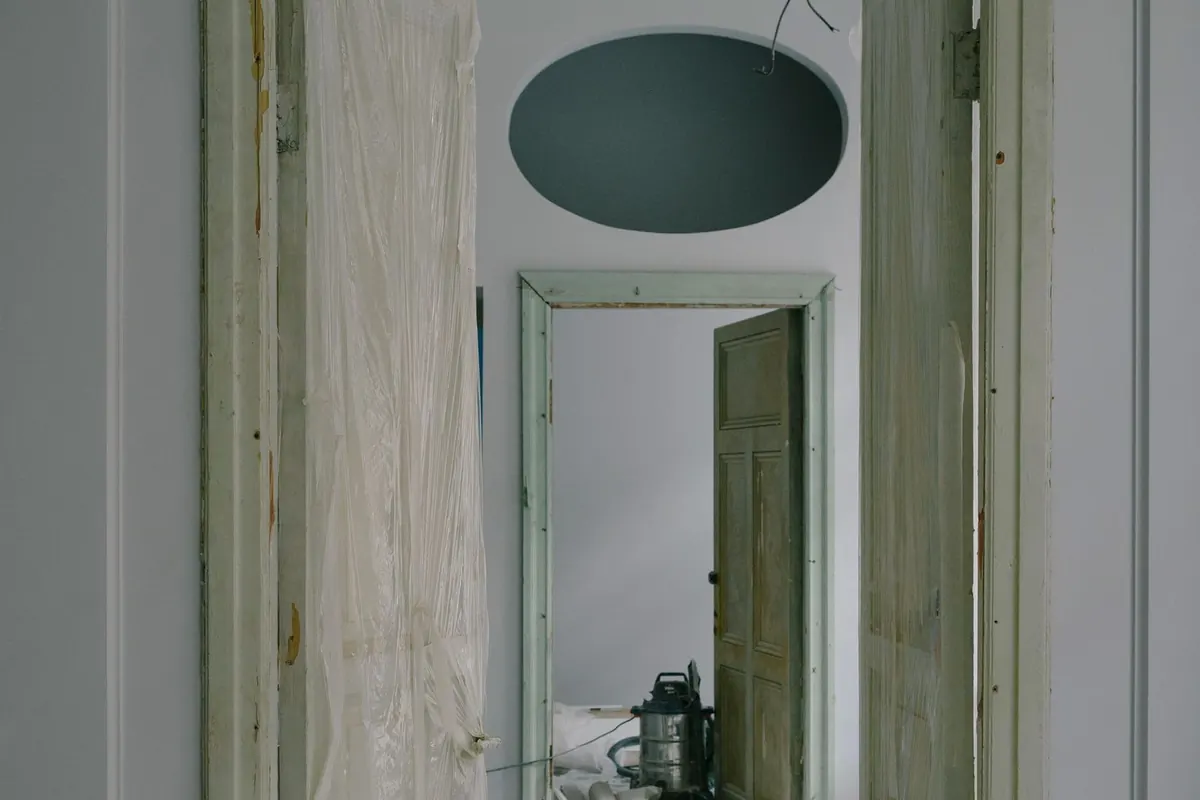
A house built before 1950 in Los Angeles commonly has galvanized supply pipe at the end of its life, knob-and-tube or ungrounded wiring, a clay sewer lateral, no insulation, a foundation that was never bolted to the framing, and framing that has been modified by three generations of people without permits.
None of that is visible on a walkthrough. It appears on demolition day. This is why we tell owners of pre-1970 houses to hold 10 to 15 percent of the budget back, and why a contractor who promises no surprises on a 1925 bungalow is either inexperienced or not being straight with you.
How to actually reduce the number
- Do not move plumbing. It is the single biggest saving available in a kitchen or bathroom
- Keep the existing footprint. Walls that stay put need no engineer, no beam and no structural inspection
- Choose the cabinet grade deliberately. Stock to custom can double the largest line in a kitchen
- Do everything at once rather than room by room, which saves 15 to 25 percent on mobilisation alone
- Make every finish selection before demolition, so the price is real rather than a set of placeholders
What does not work is choosing the lowest bid. The gap is almost always scope that has been left out and will come back as a change order.
Los Angeles County figures, reviewed 2026-10-29 by America General Contractors, California contractor licence CSLB 1083262. Planning ranges, not a quote, and not legal advice. We confirm the current rules for your parcel before anything is drawn.
Questions
Why are three bids for the same job so different?
Almost always because they are not the same job. One has allowances for tile at $4 a foot and another at $12. One includes the permit and one does not. One has a beam in it and one has assumed the wall is not structural. Put them side by side line by line before comparing totals.
Is it cheaper to do the work myself?
For paint and flooring, often yes. For anything needing a permit, usually not, once you count the inspections, the rework and the fact that an owner-builder permit puts the liability on you. It also has to be disclosed at resale.
Do contractors charge more in Beverly Hills than in the Valley?
Rates are similar; what differs is scope and finish. The same bathroom with the same fixtures costs roughly the same either side of the hill. What changes the number is the stone, the glass, the fittings and whether the house is 1925 or 1985.
Why do prices keep going up?
Labour mostly, plus material cost volatility. Trades are in short supply across Southern California and the fire rebuild has tightened it further. Material tariffs and insurance costs have also moved, and both land in construction pricing.
Related reading
- How much does a full home renovation cost?
- What is a change order?
- How much does a bathroom remodel cost in Los Angeles?