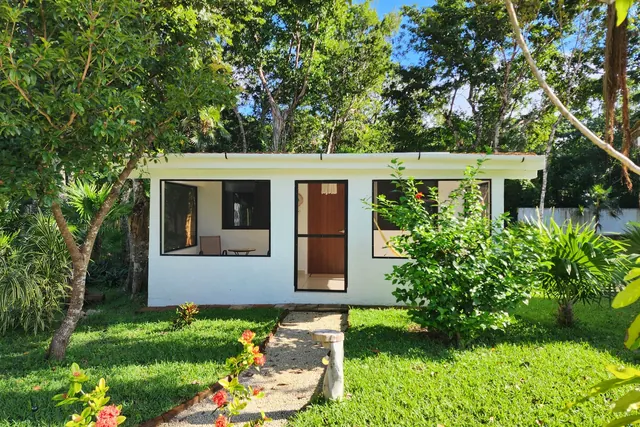
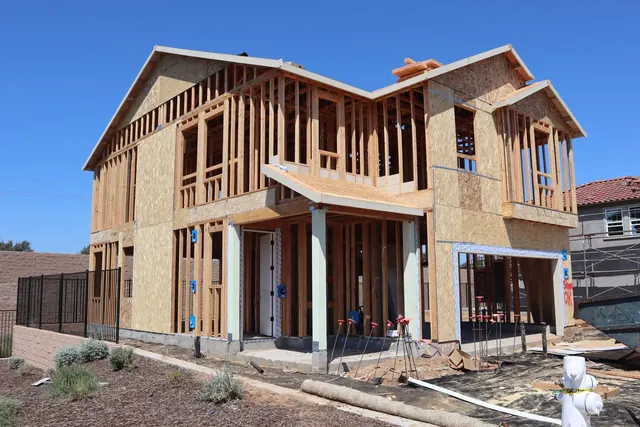
Prefab ADU prices look cheaper because the advertised figure is usually the box delivered, excluding foundation, crane, site work, utility connections, permits and drawings. Once those are added, a prefab ADU in Los Angeles typically lands within 10 to 20 percent of a site-built one. Prefab wins on schedule predictability. Site-built wins on fitting an awkward lot.
Side by side
| Prefab | Site-built | |
|---|---|---|
| Advertised price | Often box only | Usually all-in |
| What is excluded | Foundation, crane, utilities, permits, site work | Little, if quoted properly |
| Realistic all-in | $250 to $400 per sq ft | $300 to $450 per sq ft |
| Build time on site | Weeks | 5 to 8 months |
| Total timeline | Similar, permits dominate both | Similar, permits dominate both |
| Design flexibility | Fixed models | Anything that fits |
| Awkward or sloped lots | Often impossible | Workable |
| Crane access required | Yes, and it is a hard requirement | No |
| Changes once ordered | Very difficult | Possible |
What the advertised price usually leaves out
- The foundation, which on a prefab is still poured on site like any other
- Transport and the crane, which on a tight Los Angeles street is a logistics exercise of its own
- Utility connections: sewer, water, gas, power, and trenching across the yard
- Permits, plan check, school fees and the site-specific drawings
- Site work: demolition, grading, drainage, hardscape, fencing
- Final connections and finishing once the box is set
Add those and the gap narrows sharply. Prefab is not a scam, but the headline number and the number you will pay are different, and the difference is not small.
The crane is the real constraint
A prefab module arrives on a truck and is lifted into place. That needs a street wide enough for the truck and the crane, a clear flight path over the house, and sometimes a street closure permit.
In large parts of Los Angeles, narrow hillside streets, deep lots with mature trees, properties behind other properties, this simply cannot be done. The first question on any prefab project is whether a crane can physically place the unit where you want it. If the answer is no, the comparison ends there.
Where prefab genuinely wins
Schedule certainty on the construction phase. The factory builds in a controlled environment, so weather, trade availability and sequencing problems mostly disappear. Once the unit is set, the remaining work is weeks rather than months.
It also wins on a flat, accessible lot where one of the standard models is close to what you wanted anyway. If the model fits, you are paying for a well-developed product rather than a bespoke one.
Where site-built wins
Any lot that is sloped, narrow, tree-covered, hard to reach or oddly shaped. Any project where the unit needs to match the main house. Any situation where you want a layout the factory does not make.
It also wins when you want the option to change something mid-project. A stick-built wall can move. A factory module cannot.
The permit timeline is the same either way
This is the part prefab marketing understates. The factory build is fast, but you still need drawings, structural review, an energy-code report, a site plan, grading where relevant, and a city permit, and the city does not care whether the building arrives on a truck.
Permits take two to four months either way, and they usually dominate the schedule. The prefab advantage is real but it applies to one phase, not the whole project.
Los Angeles County figures, reviewed 2026-10-29 by America General Contractors, California contractor licence CSLB 1083262. Planning ranges, not a quote, and not legal advice. We confirm the current rules for your parcel before anything is drawn.
Questions
Is prefab actually cheaper?
Sometimes, by perhaps 10 to 20 percent once everything is counted, on a lot that suits it. On a lot that does not suit it, prefab is either more expensive or impossible.
Do prefab ADUs appraise lower?
A permitted, properly foundation-set modular unit is real property and generally appraises as such. A manufactured home on a non-permanent chassis is a different asset class and is treated differently. Confirm which one you are buying.
Can a prefab go on a hillside?
Rarely, and when it can the foundation and crane work often costs more than the saving. Hillside lots are where site-built is usually the only practical answer.
Who does the site work for a prefab?
A local licensed general contractor, which is often us. The factory makes the box; somebody still has to prepare the site, pour the foundation, connect the utilities and finish the job.
What should I ask a prefab company?
Get the exclusions in writing. Ask specifically: does this price include foundation, crane, delivery, utility connections, permits, drawings, site work and final connections? Then compare that total to a site-built quote, not the headline to the total.
Related reading
- ADU Cost Per Square Foot in Los Angeles
- Building on a Hillside Lot in Los Angeles
- Pre-Approved ADU Plans in Los Angeles